Is It Worth the Behavioral Fallout? Vet Visits and Fearful Dogs
Written by Lauren Tsao, MS, CDBC, CPDT-KA, DDP

You are sitting in the parking lot of your dog’s veterinary clinic with the engine off. The ticking of the cooling car suddenly becomes very loud. Your hands stay on the steering wheel a little longer than they need to. In the back seat, your dog is already panting from stress. You have not even opened the car door yet.
Your dog noticed where you turned. They always do. Their breathing shifted two blocks ago. Their eyes are already wide and scanning for threats. You can see the whites showing more than usual.
You know what comes next. The ordeal to even make it into the clinic begins with hesitation when the door opens, then their refusal to step out, and the way their body lowers just slightly, as if gravity has increased.
You both have worked so hard, built trust, and made hard-won progress. And you can already feel the knot in your stomach at the thought of undoing it. In that moment, a question surfaces. “Is this worth it?”
A version of that question came up during a recent behavior consult. My client asked me, “If my dog is terrified of the vet, at what point is it not worth the behavioral fallout to take them?” This was such a thoughtful question that I thought I would share my answer.
The Cost of Missing Something
Living with a dog who unravels on the way to the clinic does not feel normal. It does not feel minor. When your dog begins to pant the moment you turn onto the familiar street, trembles in the lobby, or plants their feet and refuses to cross the threshold, it creates a very real emotional conflict. It can feel as though you are being asked to choose between safeguarding their psychological well-being and ensuring their physical health. No one who has invested time, patience, and care into their dog wants to knowingly push them into distress. And no one wants to jeopardize progress that has taken months or years to build.
At the same time, behavior does not exist separately from the body. There is no meaningful category of “just behavioral.” Changes in tolerance, reactivity, or mood often have physiological contributors. Pain lowers thresholds and alters emotional regulation. Even subtle medical processes can shift a dog’s baseline long before outward clinical signs become obvious. When fear leads us to postpone veterinary evaluation entirely, we may overlook an underlying factor that is shaping the very behavior we are attempting to address.
Sometimes I think about it like a smoke alarm.
If the alarm goes off in your house, you have two choices. You can remove the batteries because the sound is annoying, or you can investigate the cause. The noise itself is unpleasant. It raises your heart rate and creates urgency. But the alarm itself is not always the problem. Sometimes it’s a warning of a bigger problem.
Behavior can function the same way. Anxiety, irritability, aggression, withdrawal, or reactivity may be the “alarm.” They are uncomfortable to witness, disrupt daily life, and make us want relief quickly. But silencing outward behavior without asking what is fueling it is like disconnecting the alarm without checking for fire. Sometimes you will find burnt toast. Other times, you will find something that requires immediate attention. In behavioral work, our responsibility is not to quell the alarm at all costs. It’s to determine whether there is a fire in the house, and to do so without causing unnecessary damage.
This is not a theoretical concern for me. In the past year, five dogs referred for behavior assessments were later diagnosed with cancer following veterinary workups. None presented with dramatic warning signs, and even I was surprised by their diagnoses. Their guardians sought help for escalating anxiety, unexpected irritability, or regression in previously stable behavior. On the surface, these cases appeared “behavioral”. Without veterinary investigation, the medical component would have remained hidden - perhaps until it was too late. Experiences like these have altered my perspective. They made it clear to me that outward behavior does not reliably reveal the severity of what may be happening internally, and they force you to consider risk with greater humility.
How Do I Know A Vet Check Is Worth It?
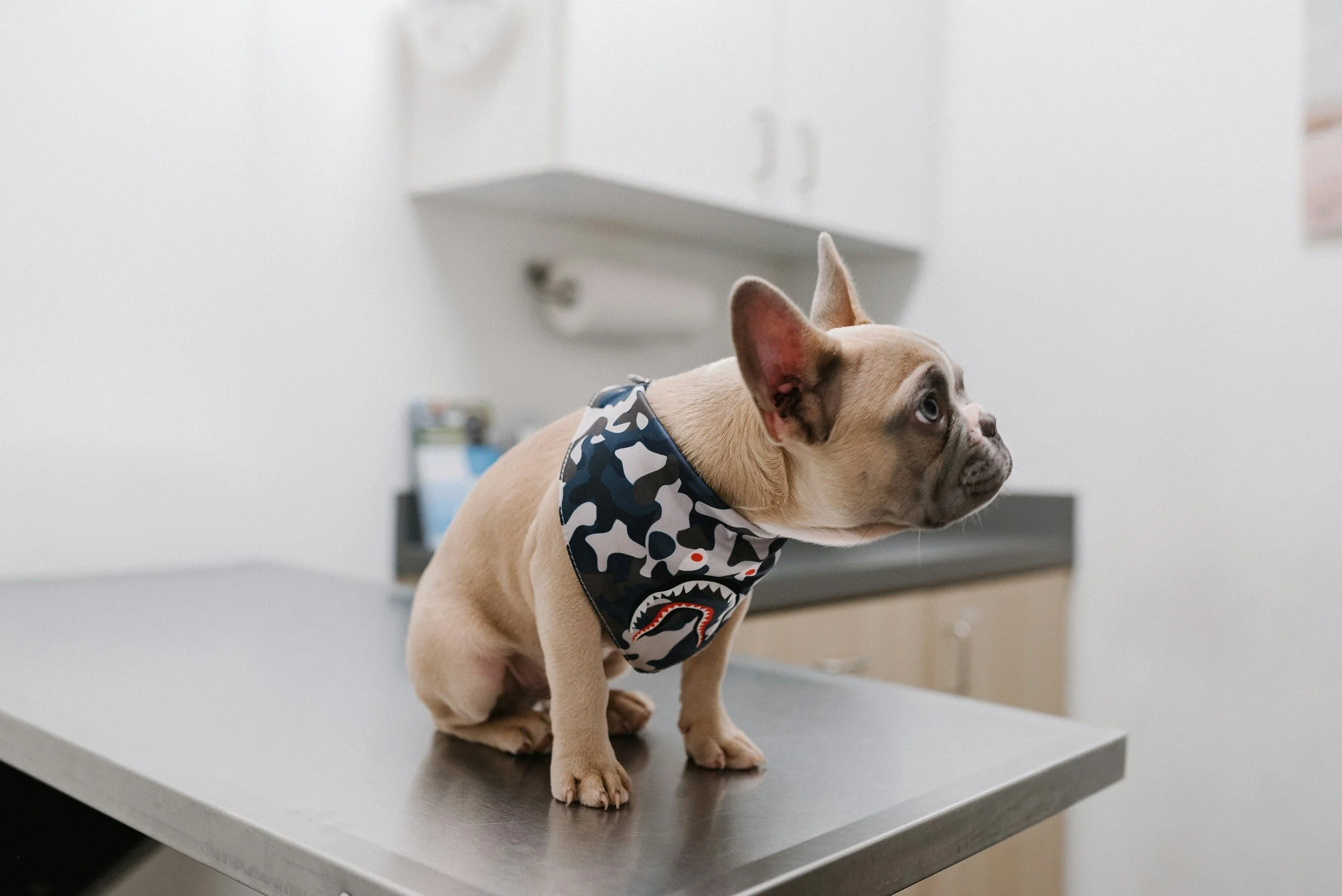
We cannot determine from behavior alone whether a dog is experiencing minor discomfort or facing something that requires immediate medical attention. Outward signs rarely tell the full story. A dog who appears simply anxious may be coping with inflammation, internal pain, or an emerging disease process that has not yet produced obvious physical symptoms. That ambiguity is what makes these decisions so heavy. Choosing to forgo veterinary evaluation entirely carries risk, because we are making that choice without complete information.
At the same time, forcing a deeply fearful dog through an extensive examination without preparation is not careful advocacy. Flooding a dog who is already at capacity does not serve their welfare. Thoughtful care requires us to weigh both physiological and emotional impact.
The more realistic question is not whether to seek medical input, but how to do so in a way that respects the dog’s limits. For some dogs, pre-visit medication meaningfully lowers arousal and increases their ability to cope. For others, a shorter appointment focused on a single objective may be more appropriate than a comprehensive exam. In certain cases, a technician visit, curbside intake, or a mobile veterinarian visit reduces environmental impact enough to make evaluation possible. Some dogs may call for a gradual approach, with each step introduced deliberately rather than all at once.
When there are no immediate indicators of urgency, it can be appropriate to invest time in cooperative care training so that handling becomes more predictable and less threatening. Video of movement, posture, and daily behavior captured at home can also provide valuable information while planning next steps.
A dog who has been consistently shy but remains physically stable may allow for a slower, structured plan. Sudden behavioral changes, escalating irritability, disrupted sleep, altered appetite, mobility changes, or increased sensitivity heighten concern and warrant moving more quickly.
What I have seen repeatedly is that avoiding veterinary care altogether often prolongs behavioral cases. When pain or illness is part of the picture, progress stalls no matter how skillful the training plan may be. This can also increase the overall cost for families seeking training as the only solution, raising even more ethical questions. Reinforcement cannot resolve untreated pathology. At the same time, responsible action does not require pushing a dog beyond their coping capacity. The goal is not to overwhelm in the name of being proactive, but to obtain necessary information while protecting the dog’s overall welfare.
No two dogs present the same way, and no two cases should be handled the same way. Some dogs benefit from pre-visit medication that lowers physiological arousal enough to make examination feasible. Others require environmental adjustments, such as quieter appointment times or alternative options for entering the clinic. Certain dogs do best with a gradual, staged approach that builds tolerance over time. In more urgent situations, immediate diagnostics may be necessary despite discomfort, because the medical risk outweighs the emotional strain. Thoughtful decision-making means assessing which path fits the individual in front of you, rather than applying a single template to every case.
This is where veterinarian collaboration becomes important. A veterinarian who understands fear and is willing to adapt handling procedures can dramatically alter a dog’s experience. A behavior professional can help prepare the dog through cooperative care training, strategic planning, and helping set realistic expectations. When these disciplines work together rather than operate in isolation, the process becomes more measured and far less reactive.
There is almost always a space between avoidance and overwhelm. Choosing that space requires honesty about what we know, humility about what we do not, and a willingness to involve the right professionals at the right time. That approach is not a sign of fragility or overcaution. It reflects thoughtful advocacy and a commitment to the whole animal and their welfare. When we gather information responsibly and act with both courage and restraint, we give our dogs the best chance at relief, stability, and meaningful improvement. In many cases, that middle-road approach is what allows progress to move forward instead of stalling in uncertainty.

At the end of the day, this decision is not about proving resilience or avoiding discomfort at all costs. It is about advocacy. It is about recognizing that our dogs rely on us to make thoughtful choices when they cannot understand the bigger picture. Sometimes that means slowing down and preparing carefully. Sometimes it means acting sooner than we would prefer. What matters is that the choice is informed, collaborative, and centered on the dog’s overall welfare. When we are willing to balance emotional safety with medical responsibility, we move from reacting out of fear to responding with clarity. That shift is often where true progress begins.
Need help getting your fearful or aggressive dog to the vet? Check out our related services below: